
Last updated November 24, 2026
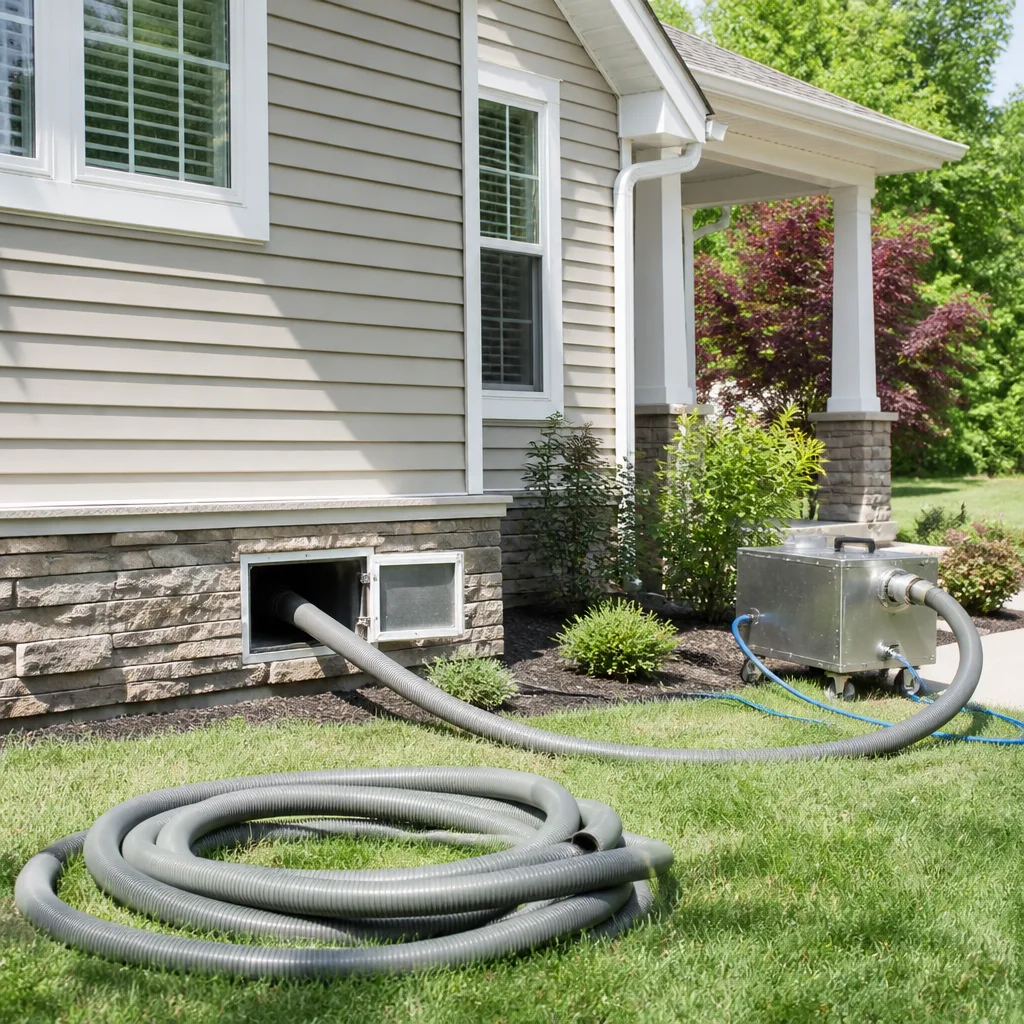 Whole-home duct cleaning
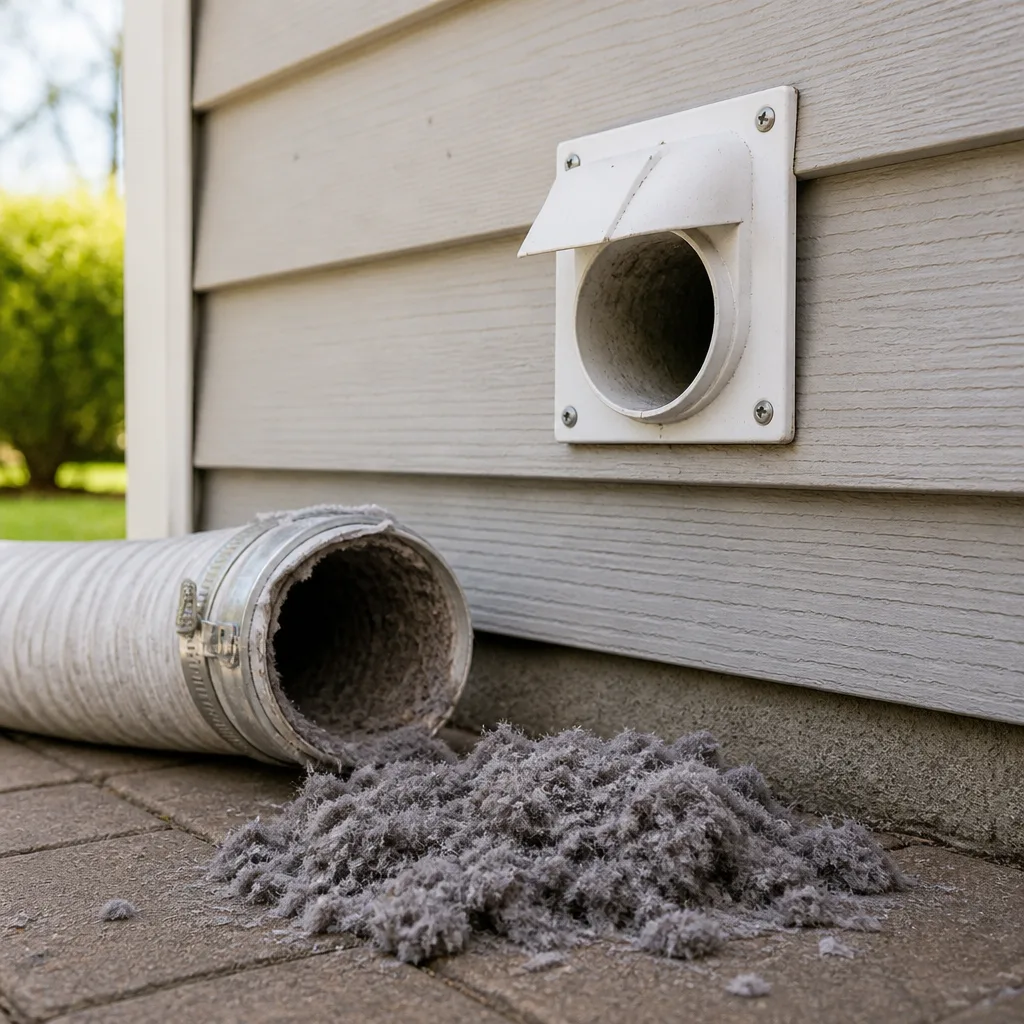 Dryer vent cleaning
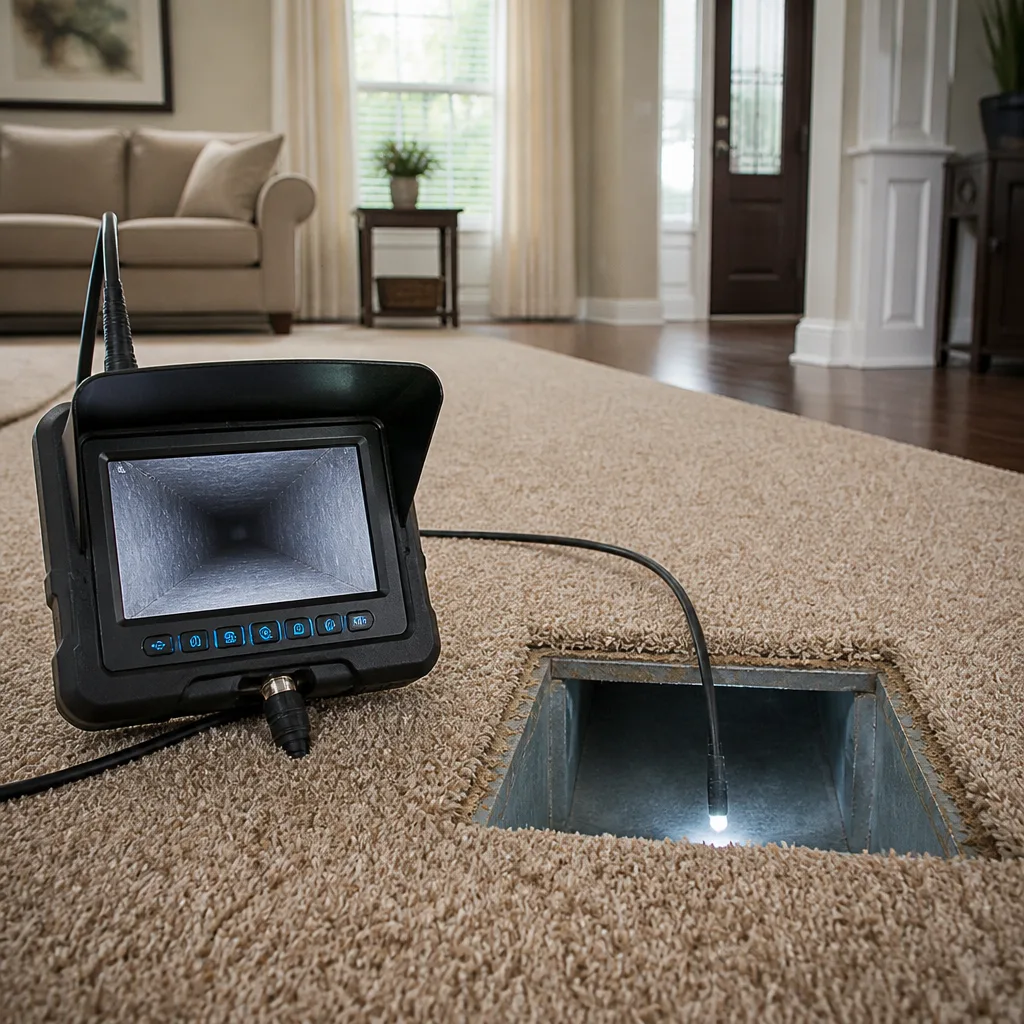 Camera inspection
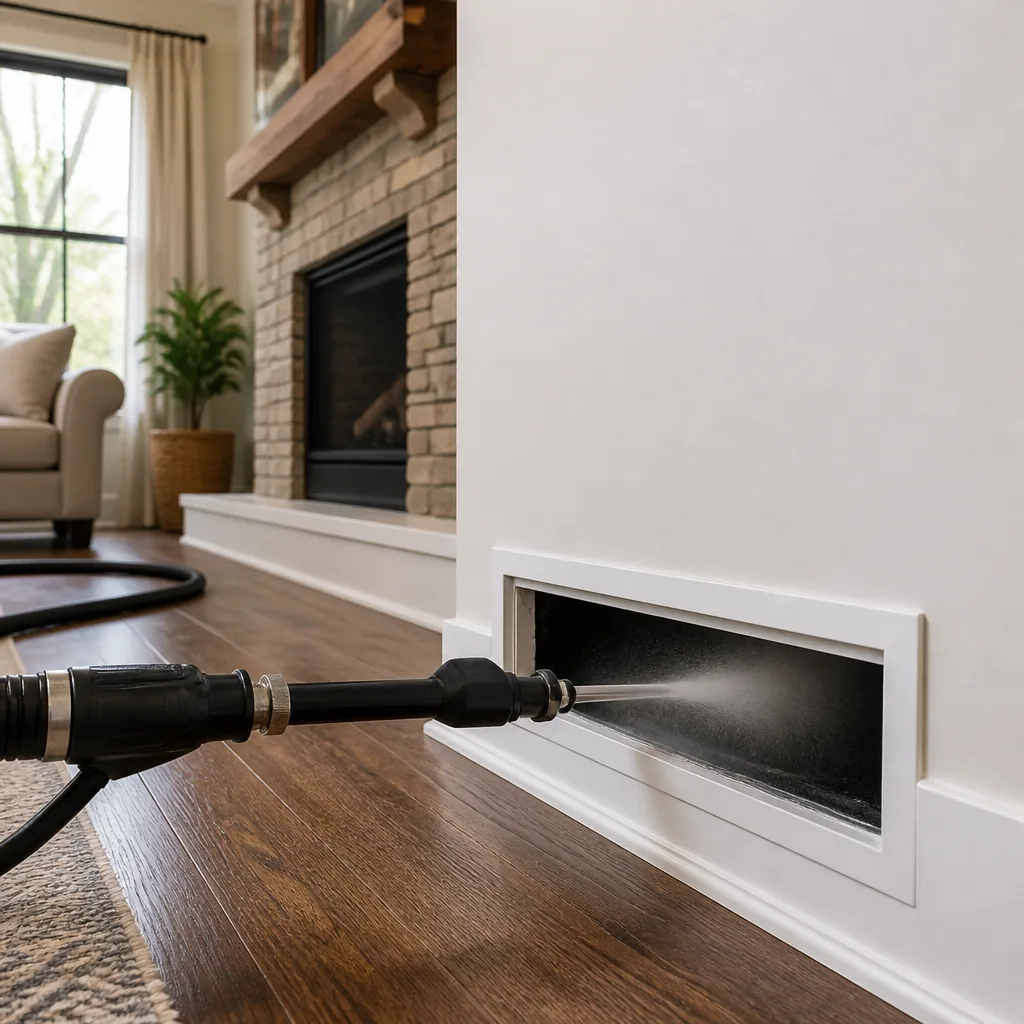 Sanitizing & deodorizing
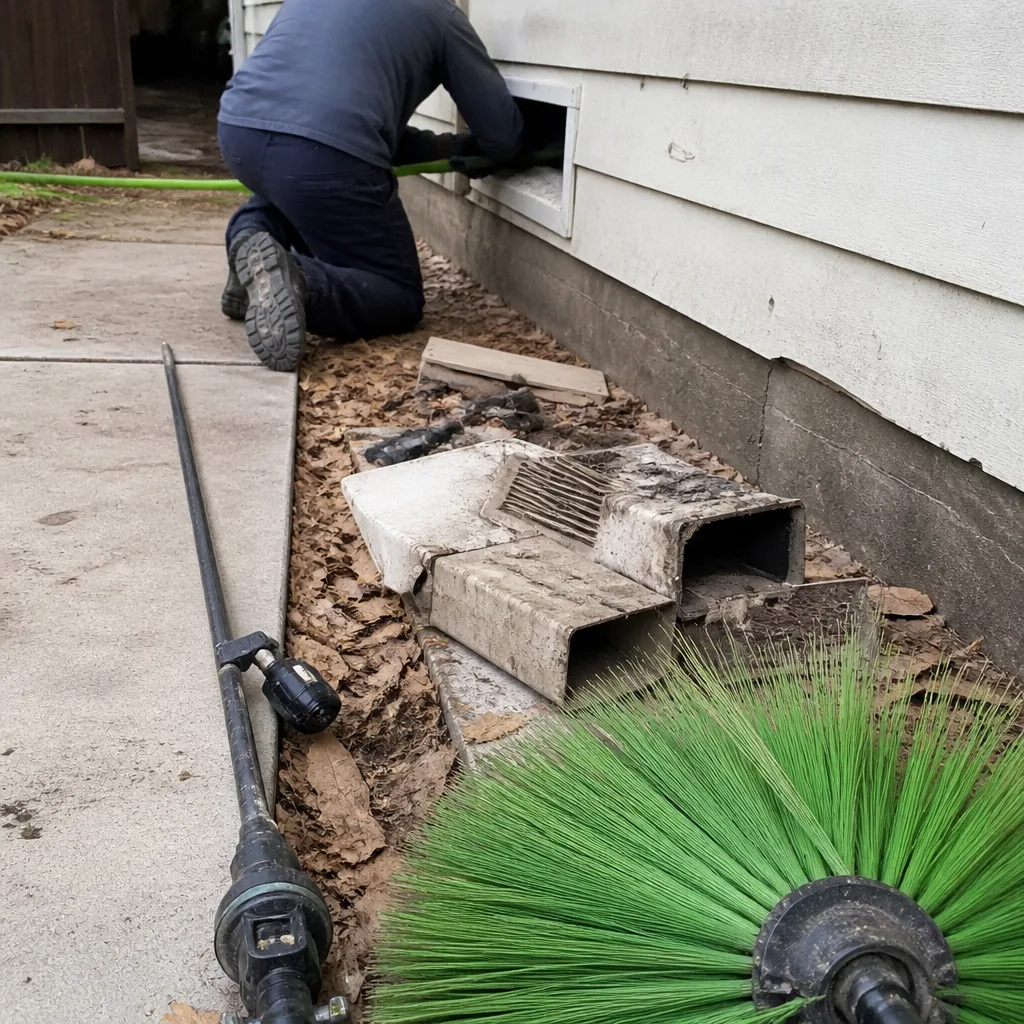
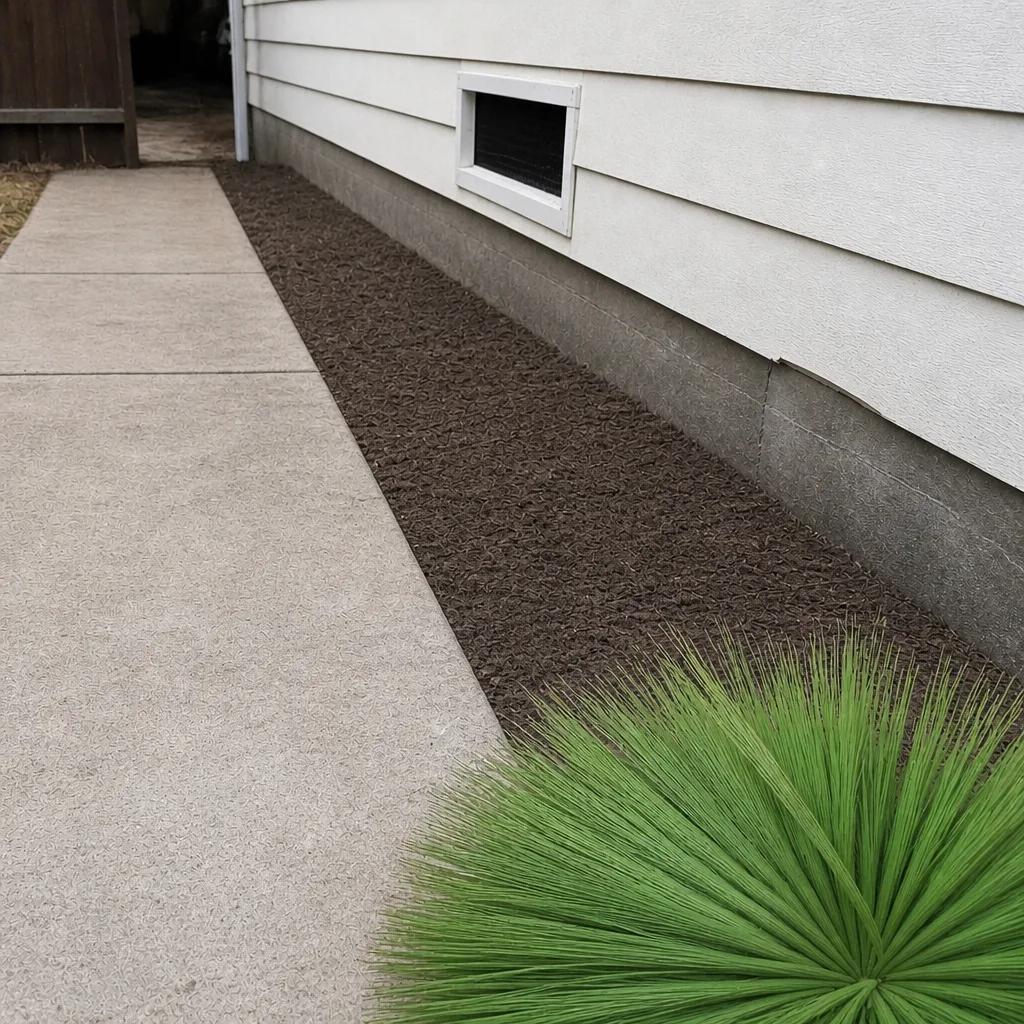
Whole-system duct and dryer vent check with before-and-after photos - you see exactly what came out of your vents
That "$99 whole-house special" is a bait ad - the real number appears once they are in your hallway, or the "clean" is a shop-vac at the register. We photograph the inside of your ducts before and after instead.
Seasonal Air Duct Cleaning Care for Clearfield: Year-Round Homeowner’s Guide
Most homeowners schedule duct cleaning in January because the calendar says “new year.” In Clearfield, that’s often the worst possible timing. By January, winter inversion season is already underway along the Wasatch Front, trapping fine particulates in the valley air, and months of heating have already pulled that material through your system. Meanwhile, the cleaning happens well before wildfire smoke season and months before the system switches to cooling mode. The result is ducts that get dirty again almost immediately. This guide explains how Clearfield’s four seasons actually stress a duct system, when each one hits, and how to build a cleaning cycle around those pressure points instead of an arbitrary date.
Quick Answer
The best time to clean air ducts in Clearfield is late spring, after pollen season winds down and before summer air conditioning demand peaks, followed by an assessment after any major wildfire smoke event in July through September. Rather than cleaning once every year on a fixed date, most Clearfield homes do best on a two-year professional cycle that lands cleaning in that late spring window and adds a quick inspection after heavy smoke or inversion seasons. If your ducts haven’t been checked in more than two years, or you’ve noticed dust, musty smells, or uneven airflow, it’s worth a look regardless of the calendar.
Styles & brands we work with
- Whole-home duct cleaning
- Dryer vent cleaning
- Camera inspection
- Sanitizing & deodorizing
Table of Contents
- Why Timing Your Duct Cleaning Matters More Than Frequency
- Winter Inversions and What They Do to Your Ducts
- Late Spring: Clearfield’s Optimal Cleaning Window
- Wildfire Smoke Season: What Gets Deposited and How to Assess It
- The Fall Startup Checklist Before You Switch to Heat
- Building a Two-Year Cleaning Cycle Around Clearfield’s Seasons
- Why Full-System Coverage Beats Surface Cleaning
- Signs Your Ducts Need Attention Off-Cycle
Why Timing Your Duct Cleaning Matters More Than Frequency
A duct system is not a sealed box. It’s a network of return and supply lines that pulls air from inside your home, moves it through a blower and filter, and pushes it back out through registers in every room. Whatever is in the air outside gets pulled into your home every time the system runs. That means the condition of your ducts is tied directly to what’s happening in the air around Clearfield at any given moment.
We’ve seen this play out repeatedly. A home cleaned in the middle of winter often looks noticeably dustier by the following summer than one cleaned in May, even with the same level of use. The reason is straightforward: cleaning removes what’s accumulated, but it doesn’t stop the next accumulation. If you clean right before a heavy season, you’re resetting the clock when the system is about to get hit hard again. If you clean right after one, you’re clearing out the accumulated load and heading into a lower-impact stretch.
The practical takeaway is that seasonal timing produces measurably better results than a fixed annual reminder. In Clearfield specifically, the seasons are distinct enough that each one creates its own stress pattern:
- Winter: heating-dominant, with inversion events trapping particulates in the valley
- Spring: high pollen counts followed by a switch to cooling mode
- Summer: peak AC demand plus periodic wildfire smoke along the Wasatch Front
- Fall: the system sits idle for a stretch, then fires up for heating season
Each of those four windows loads the system differently, and each one benefits from different attention. A cleaning schedule that ignores this is guessing.
Winter Inversions and What They Do to Your Ducts
Utah’s winter inversions are a specific meteorological event: a layer of warmer air settles above colder valley air and effectively caps the bowl, trapping pollutants, dust, and fine particulates below. Along the Wasatch Front, including Clearfield, these inversions can persist for days or even weeks at a stretch during December, January, and February.
Here’s what that means for your ductwork. During an inversion, the outside air is holding fine particulate matter that would normally disperse. Your HVAC system pulls in a steady supply of indoor air and, through normal leakage, a small amount of outdoor air. That fine dust and soot gets drawn into the return system, cycles through your filter, and whatever isn’t caught settles onto duct surfaces in the same way dust settles on a windowsill. By February, a duct system that was reasonably clean in November has often accumulated a visible layer that wouldn’t have built up during a normal dispersal season.
The other effect is that inversions push people indoors more, which raises the number of hours the system runs and the amount of household dust, dander, and cooking particulates circulating through the same ducts.
Two things make a difference for Clearfield homes during inversion season:
- Upgrade filtration before the season, not during it. A medium-efficiency filter or a system matched to a Honeywell or Aprilaire filtration cabinet does more work during inversion weeks than a standard fiberglass filter ever will. The filter is your first line of defense, and it needs to be in place before the season starts.
- Do the main cleaning before the season, not after. Cleaning in late fall or early winter, before inversions settle in, means the system starts the season with a clean slate rather than accumulating onto an already-loaded duct surface.
If your ducts haven’t been assessed since last winter’s inversion season, the accumulation is worth a look. Call (833) 468-5771 for a free estimate and we’ll tell you what we find.
Late Spring: Clearfield’s Optimal Cleaning Window
In our view, late spring is the single best time to schedule professional air duct cleaning in Clearfield, and it comes down to a specific sequence of events.
First, pollen season winds down. Tree pollen peaks in April and May along the Wasatch Front, followed by grass pollen into June. During peak pollen weeks, airborne material is everywhere, and cleaning mid-pollen means the ducts get a fresh coating of pollen almost immediately. Waiting until the pollen load drops gives you a cleaner starting point.
Second, the system is about to switch from heating-dominant to cooling-dominant. That transition is when the blower and evaporator coil see the most use, and when accumulated dust in the supply lines gets pushed through the cooling coil and back into every room. Cleaning before the switch means the cooling season starts with clean air moving through it.
Third, the cooling coil itself stays cleaner when the upstream ducts are clean. Dust that reaches the coil condenses with moisture and forms a sticky layer, which reduces efficiency and provides a surface for biological growth. Cleaning the ducts before cooling season reduces how much dust lands on the coil during the hot months.
Our late spring cleaning window typically looks like this:
- Confirm pollen has dropped (usually late May into early June)
- Inspect the return grilles, supply registers, and main trunk lines
- Clean the full system with professional-grade agitation equipment
- Inspect the cooling coil and blower for accumulation
- Replace or upgrade the filter before cooling season begins in earnest
This same window is also a good time to schedule dryer vent cleaning, since lint accumulation is a year-round fire risk that spring cleaning routines often miss. And it’s a natural point to check the blower and coil as part of HVAC cleaning.
Wildfire Smoke Season: What Gets Deposited and How to Assess It
Wildfire smoke events are common along the Wasatch Front from July through September. The smoke may originate hundreds of miles away, but it settles into the valley and gets drawn into homes through the same returns that pull in normal outdoor air. What’s deposited in your ductwork during a heavy smoke event is different from ordinary household dust. It’s fine particulate and ash residue, and it tends to be lightweight, sticky, and easily re-suspended.
The problem with smoke residue is that it doesn’t stay put. It settles on duct surfaces during the event, then gets picked up and pushed back into the room the next time the system runs, long after the smoke clears. That’s why a duct system that was clean in June can be noticeably contaminated by September if the summer had multiple smoke events.
Here’s how to assess your system after a smoke event:
- Check the filter first. A filter that was clean in June and gray or loaded in September is telling you the system pulled a lot of material through it. Replace it immediately.
- Look at the return grille. Remove the grille and shine a light into the return. Visible gray or black residue is a sign that material reached the duct surface.
- Notice the smell. Smoke odor that lingers after the outdoor air clears often means residue has settled in the system. Air sanitizing and filtration work alongside cleaning to address it.
- Watch for increased dust. If surfaces in the home get dusty faster after a smoke event than before, that’s the system pushing residue back out.
After a heavy smoke season, a professional assessment is worth doing even if a full cleaning isn’t due yet. We use Abatement Technologies containment and air-scrubbing equipment during this kind of work specifically to keep disturbed particulate contained rather than pushed into the living space. For Clearfield homes that see repeated smoke events, that containment step is where a lot of the value sits.
The Fall Startup Checklist Before You Switch to Heat
The first heating startup of the year is when accumulated summer dust and smoke residue gets pushed through the whole system at once. That’s also when many homeowners first notice a smell or a dust plume from the registers. A short checklist before the first heat run prevents that.
Here’s what we recommend, in order:
- Replace the filter. After a summer of smoke events and heavy AC use, the filter is usually loaded. Replace it before the first heating cycle so the system isn’t fighting a clogged filter from the start.
- Inspect the return grilles and supply registers. Dust buildup on the grilles themselves is normal; heavy gray residue inside is worth a closer look.
- Look at the heat exchanger area if accessible. If you can safely see the heat exchanger without disassembling anything, a visual check for dust accumulation is worthwhile. If it’s not visible without opening the unit, leave it to a technician.
- Schedule a professional inspection if the last cleaning was more than two years ago, or if you saw smoke residue in fall. Duct accumulation that goes into heating season stays there through the winter.
- Test the system on a mild day. Run the heat briefly before the first cold snap so any issues surface when it’s not urgent. If you smell burning dust the first time, that’s usually dust on the heat exchanger and it burns off quickly. If the smell persists or smells like gas, stop the system and call a technician.
This is also a good point to look at your filtration setup. If you’re still running a basic filter, a fall upgrade to a Honeywell or Aprilaire filtration product means the system starts heating season with better protection. For Clearfield property managers juggling multiple units, a single fall startup checklist run across all of them prevents the calls that pile up in December.
Building a Two-Year Cleaning Cycle Around Clearfield’s Seasons
A fixed annual “clean the ducts every year” calendar is a common recommendation, and it’s not wrong in principle, but it’s imprecise for a climate like Clearfield’s. Four distinct seasons each stress the system differently, and a two-year cycle timed to those pressure points often produces better results than a yearly appointment scheduled at a random date.
Here’s how we’d structure a two-year cycle for a typical Clearfield home:
Year One
- Late May or early June: Full professional cleaning before cooling season. Filter upgrade if it’s been a while. This is the main cleaning event.
- Late September: Post-summer assessment. If smoke events were heavy, add a targeted cleaning or sanitizing step. If not, a filter change and register check are usually enough.
- Late November: Pre-inversion filter change. No cleaning needed if the May cleaning was thorough.
Year Two
- Late May or early June: Assessment only, unless the home is high-dust (pets, recent renovation, heavy smoke season) and needs a full cleaning.
- Late September: Filter change and register inspection.
- Late November: Filter change before inversion season, with a full cleaning scheduled for the following spring if the May assessment flagged accumulation.
That pattern gives you a professional cleaning roughly every other year, with assessments in between and filtration work covering the gaps. Homes with pets, recent remodeling, or occupants with respiratory sensitivity often benefit from more frequent cleaning; homes with light use and good filtration sometimes run comfortably on a three-year cycle. The right frequency depends on what’s actually in the ducts, which is why an assessment beats a reminder.
For Clearfield homes considering this approach, a good place to start is a free estimate. Call (833) 468-5771 and we’ll assess where your system actually is before recommending a schedule.
Why Full-System Coverage Beats Surface Cleaning
Duct cleaning done with consumer-grade equipment reaches the surfaces it can see. Duct cleaning done with professional-grade agitation equipment reaches the surfaces it can’t. The difference matters most in homes where the ducts have accumulated material over multiple seasons, because what settles deep in the trunk lines and at joints is exactly the material surface cleaning misses.
We use Rotobrush air duct cleaning systems for the agitation work, which is the industry benchmark for reaching duct surfaces throughout the system. We pair that with Nikro professional HVAC cleaning equipment, the same standard commercial contractors use. The point isn’t the brand name on the tool; it’s that the tool reaches what a shop vac reaches and then keeps going.
Clean ducts are only the beginning, though. A full-system approach covers the whole lifecycle:
- Cleaning removes what’s accumulated
- Sanitizing treats biological growth and lingering odor
- Sealing closes leaks that let unfiltered air into the system
- Repair fixes damaged duct sections before they compromise the whole system
- Filtration keeps treated air clean going forward
In our experience, the sealing step is the one most often skipped by clean-only competitors, and it’s the one that determines how long the cleaning actually holds. A duct system with leaky joints pulls air from unconditioned spaces (attics, crawlspaces, wall cavities) and that air is unfiltered. We repair what we find, right then, rather than handing the customer off to a separate contractor for the sealing and repair work.
If you want to understand the full scope of what the company does, start with Clearfield Air Duct Cleaning and the service categories laid out there.
Signs Your Ducts Need Attention Off-Cycle
The seasonal schedule is a good default, but ducts sometimes need attention before the next window arrives. Here’s what to watch for in Clearfield homes, regardless of season:
- Visible dust plumes from supply registers when the system kicks on. That’s material being pushed back out, which means the ducts are holding more than the filter can catch.
- A musty or stale smell that lingers after the system runs for a few minutes. That often points to biological growth somewhere in the system, frequently on a wet cooling coil or in duct sections that stay cool and damp during summer.
- Uneven airflow between rooms. Some variation is normal, but a room that consistently gets less air than the rest often has a duct problem, sometimes a leak or a disconnected section behind a wall.
- Increased allergy symptoms indoors. If symptoms track with the heating and cooling season rather than pollen season, the ducts are worth a look.
- Recent renovation or pest activity. Drywall dust, sawdust, and rodent activity all leave material in the ducts that a normal filter cycle won’t clear.
- A dryer taking longer than it used to. That’s a dryer vent issue, not a duct issue, but it’s worth addressing in the same visit since the underlying accumulation problem is similar.
Common Mistakes to Avoid
- Cleaning in January because “new year, new start.” You’d be cleaning right before Clearfield’s inversion season peaks and months before smoke season. The ducts would refill quickly. Late spring is the stronger window.
- Assuming a fixed annual date is enough. Frequency matters, but timing around Clearfield’s specific seasons produces better results than a reminder set on the same day every year.
- Skipping the filter upgrade. Cleaning the ducts and running a standard fiberglass filter is like mopping a floor and then walking on it with muddy boots. Filtration and cleaning work as a pair.
- Ignoring smoke events. A summer with multiple wildfire smoke events can undo months of clean-duct progress. A post-event filter change and register check costs little and prevents the next cleaning from being premature.
- Choosing a cleaner on price alone. Some quotes are low because the equipment is consumer-grade and the cleaning is surface-level. The result looks clean and isn’t.
- Skipping the sealing step. Cleaning without sealing leaky joints means the system starts pulling unfiltered air from attics and crawlspaces again immediately. Repair and sealing belong in the same visit.
- Forgetting the dryer vent. Lint accumulation is a genuine fire risk and it builds up year-round. It’s worth checking alongside the duct work.
See the difference
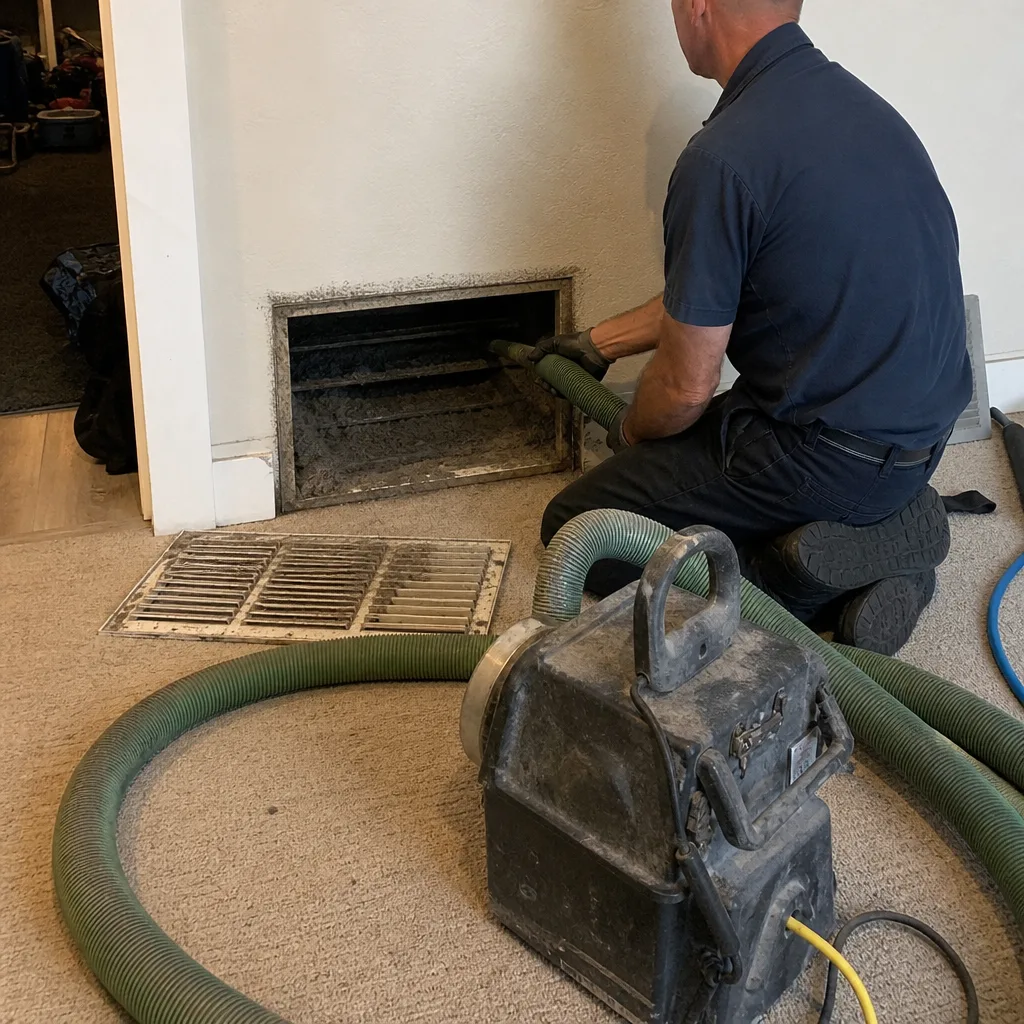 Before
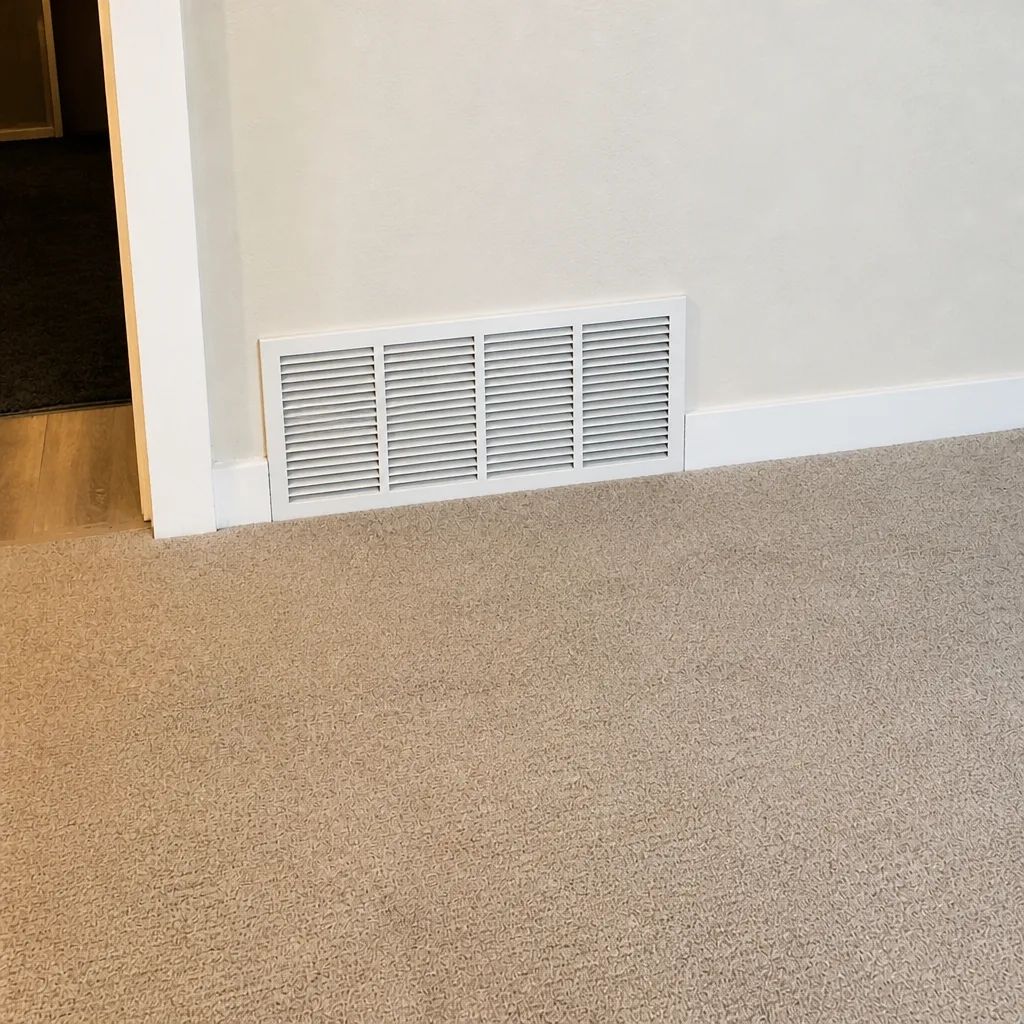 After
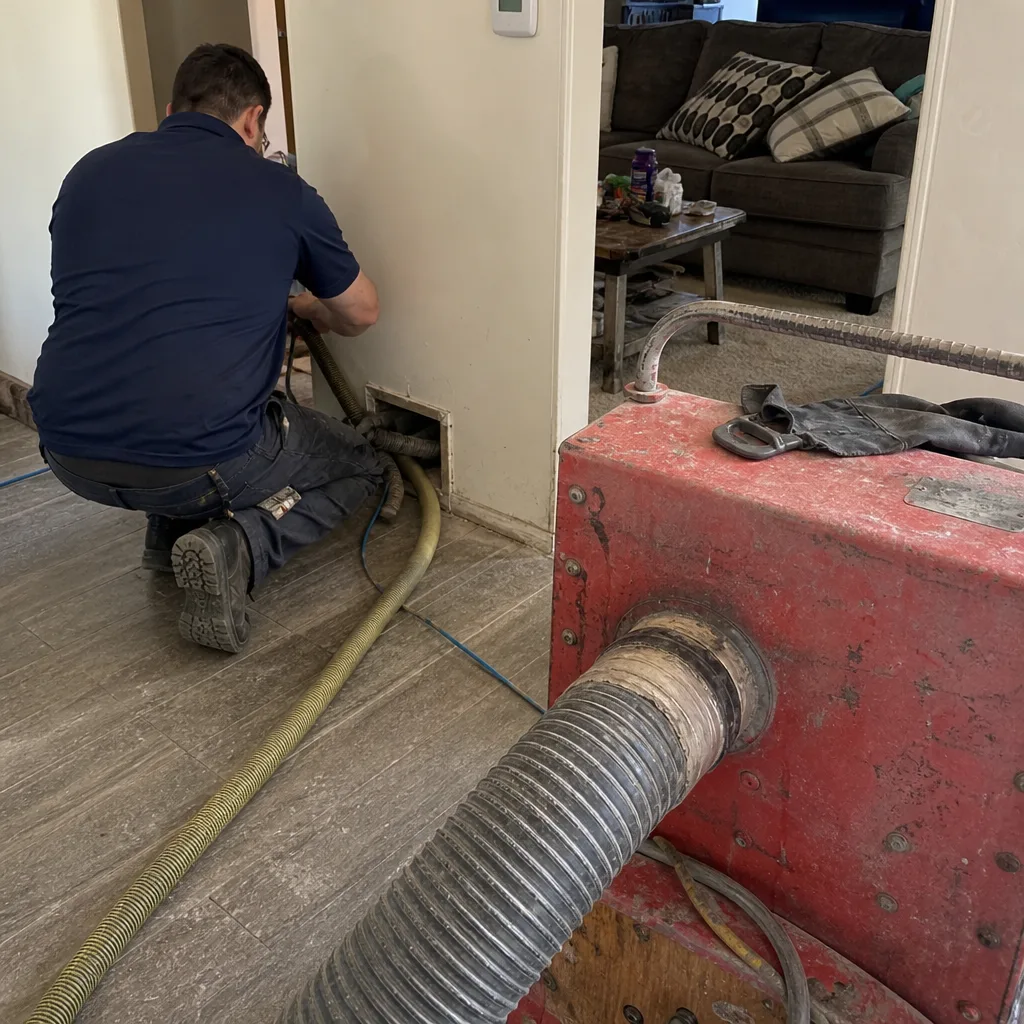 Before
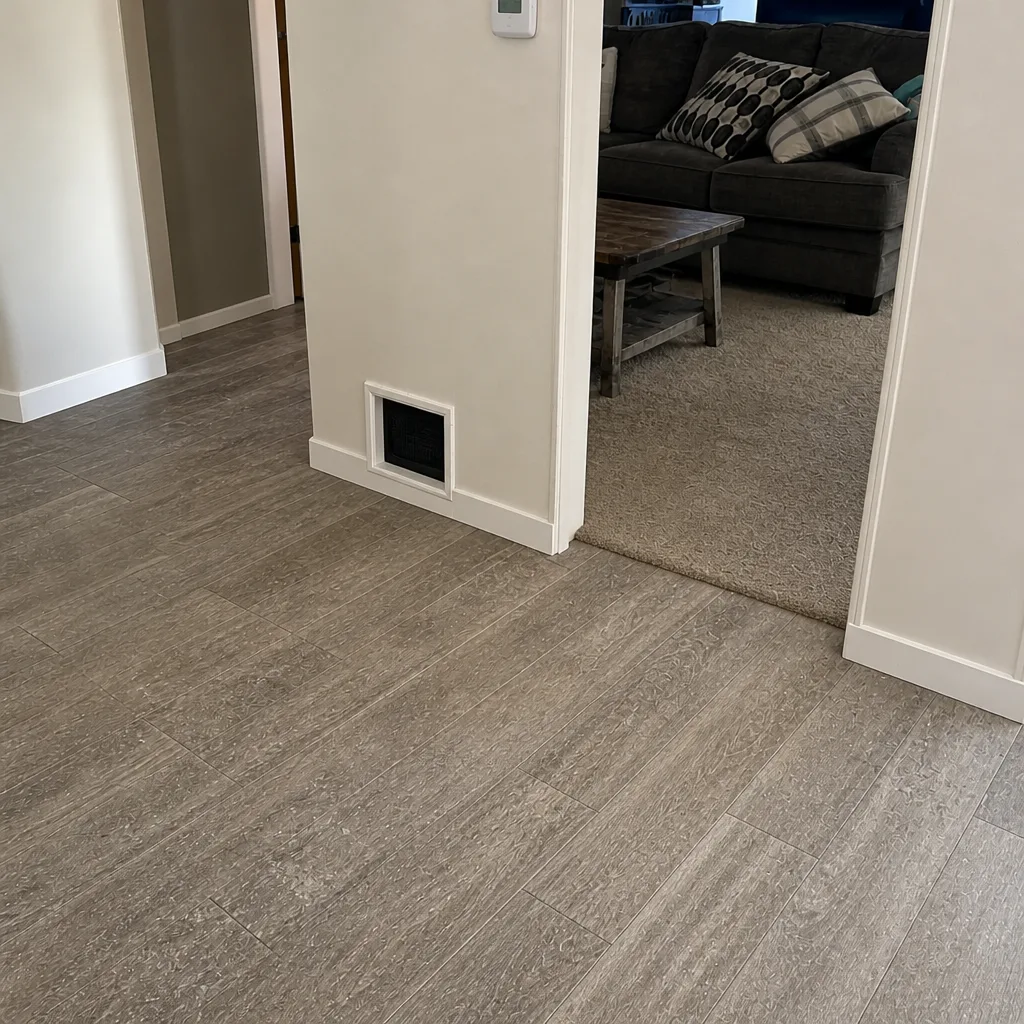 After
 Before
 After
When to Call a Professional
If your ducts haven’t been professionally assessed in more than two years, if you’ve seen smoke residue or dust accumulation after a wildfire season, if the system smells musty, or if a room consistently gets less airflow than the rest of the house, it’s time for a professional look. The same applies after any renovation, pest activity, or a bout of seasonal illness that lingered in the household.
The other reason to call is to get an honest assessment before committing to a schedule. Duct conditions vary a lot from home to home, even on the same Clearfield street, and what one home needs every two years another might need every three or every year. Clearfield Air Duct Cleaning offers free estimates in Clearfield. Call (833) 468-5771. We answer 24/7. Fast dispatch from 7am to 7pm, Sunday through Friday. Our technicians have up to 8 years of experience, and the price is set per job by a written estimate.
Frequently Asked Questions
For most Clearfield homes, a professional cleaning roughly every two years, timed to late spring, works well, with a post-summer assessment if wildfire smoke was heavy. Homes with pets, recent renovation, or occupants with respiratory sensitivity often do better on an annual cycle. The right frequency depends on what’s actually accumulating in the ducts, so a one-time assessment is the practical starting point.
Late spring is the stronger window. By late May or early June, pollen season has wound down and the system is about to switch to cooling mode, so the ducts are clean going into the heaviest use period. Fall cleaning is a reasonable alternative if spring was missed, but it lands before winter inversion season rather than after it, so the ducts have less time to stay clean.
Winter inversions trap fine particulates in the valley air, and the HVAC system pulls a small amount of that outdoor air into the return side through normal duct leakage. That material settles on duct surfaces, and by February the accumulation is often noticeably higher than it would be in a normal dispersal season. Cleaning before inversion season, in late fall, is one way to reduce the buildup.
Pricing is set per job by the written estimate, which depends on square footage, the number of vents and returns, and whether sealing or repair work is included. The estimate is free, and the price is agreed before any work starts, so there’s no bait-and-switch pricing after the technician is on site. Call (833) 468-5771 for an exact quote. Estimates are free.
Low quotes usually reflect consumer-grade equipment and surface-level cleaning rather than fogging equipment and a thorough reach into the trunk lines. The visible result looks similar in the first week; what differs is what’s left in the system. Professional-grade agitation equipment like Rotobrush is where the cost difference sits, and it’s what determines whether the cleaning actually holds.
Ask for before-and-after photos of your own ducts, and ask what equipment will be used before work starts. A company using professional-grade equipment should be able to describe the process clearly, including the containment and air-scrubbing step. If the pitch is limited to price and speed, the process is likely surface-level.
The Bottom Line
Cleaning your ducts once a year on a fixed date is better than nothing, but in Clearfield, timing matters as much as frequency. Late spring, after pollen drops and before cooling season, is the strongest window. A post-summer assessment catches wildfire smoke residue. A pre-winter filter change helps going into inversion season. Together, those three touchpoints form a two-year cycle that does more for indoor air quality than cleaning at a random date. If you want a plan tailored to your home’s actual ducts, call (833) 468-5771 to schedule a free estimate. The price is set per job by a written estimate, and photographs of your own ducts are part of the process.
Written by the team at Clearfield Air Duct Cleaning.