
Last updated November 24, 2026
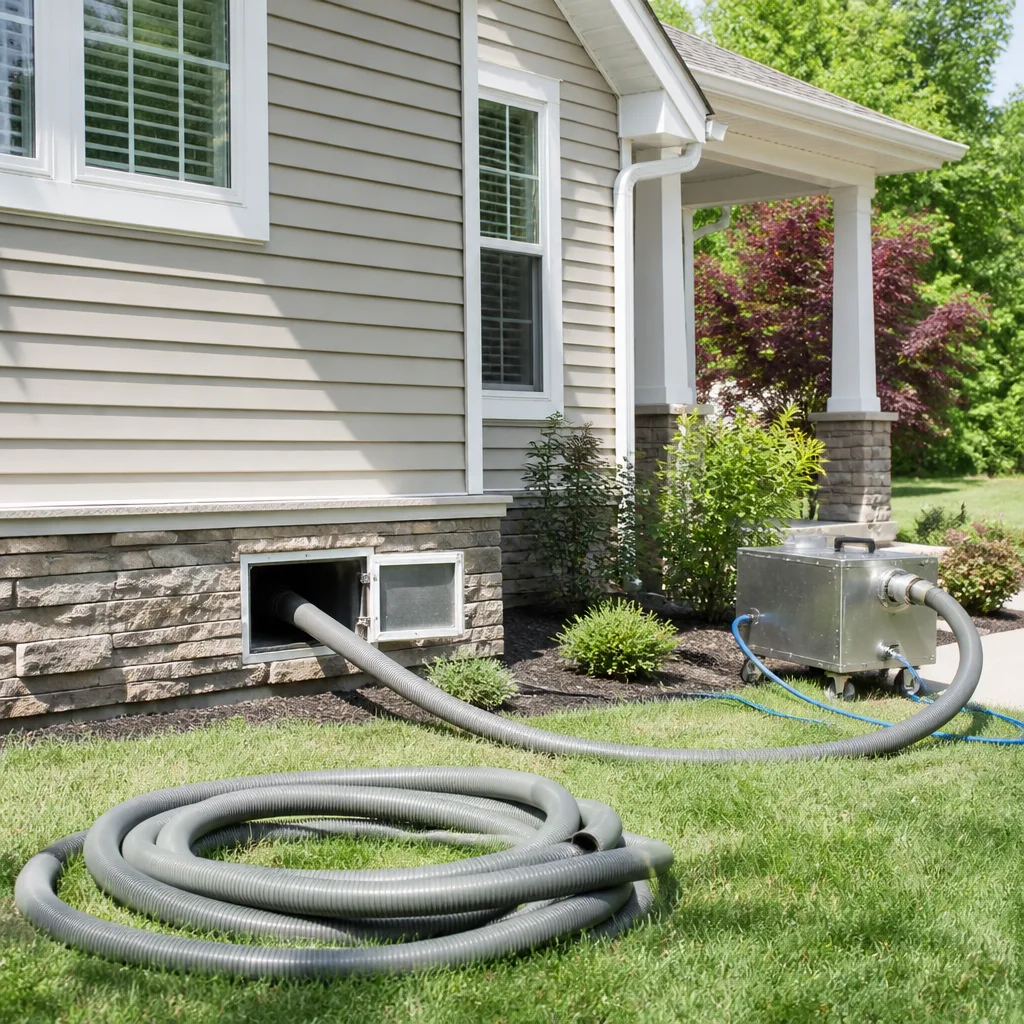 Whole-home duct cleaning
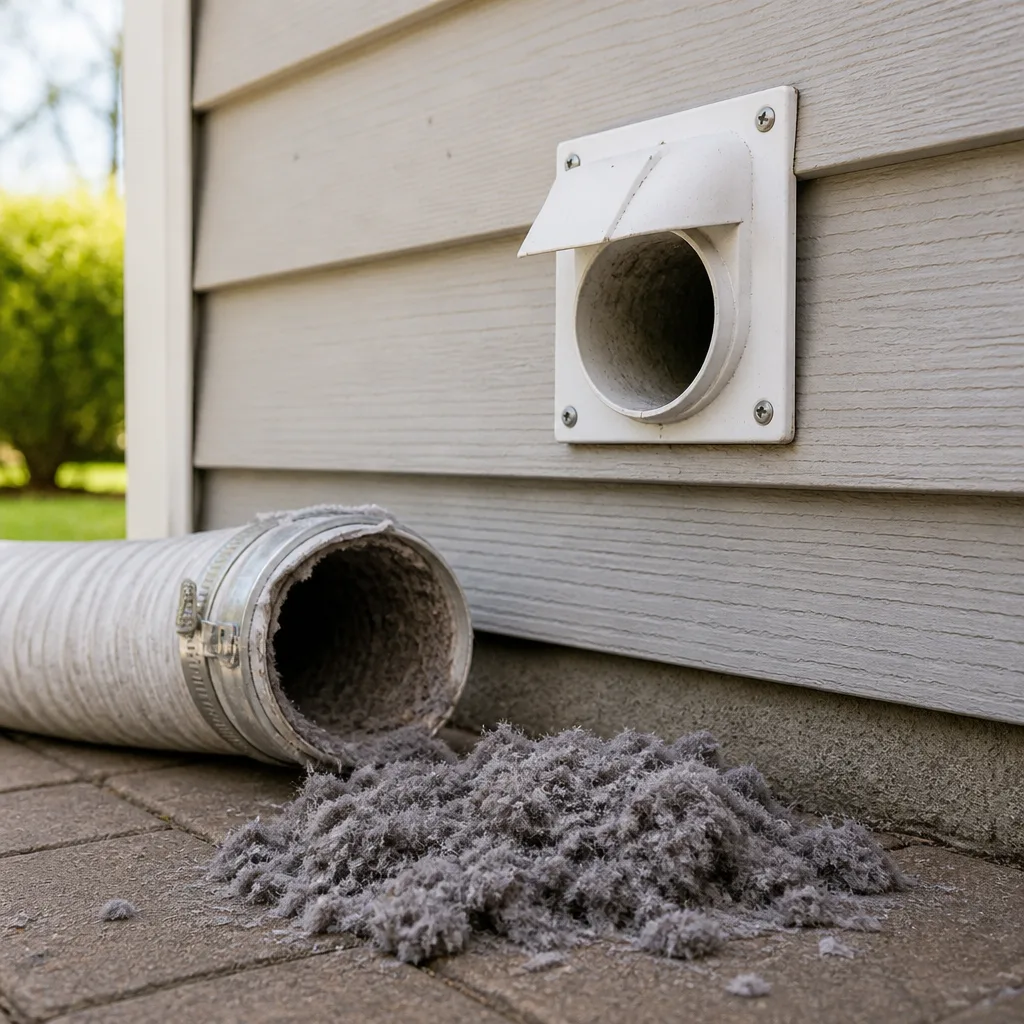 Dryer vent cleaning
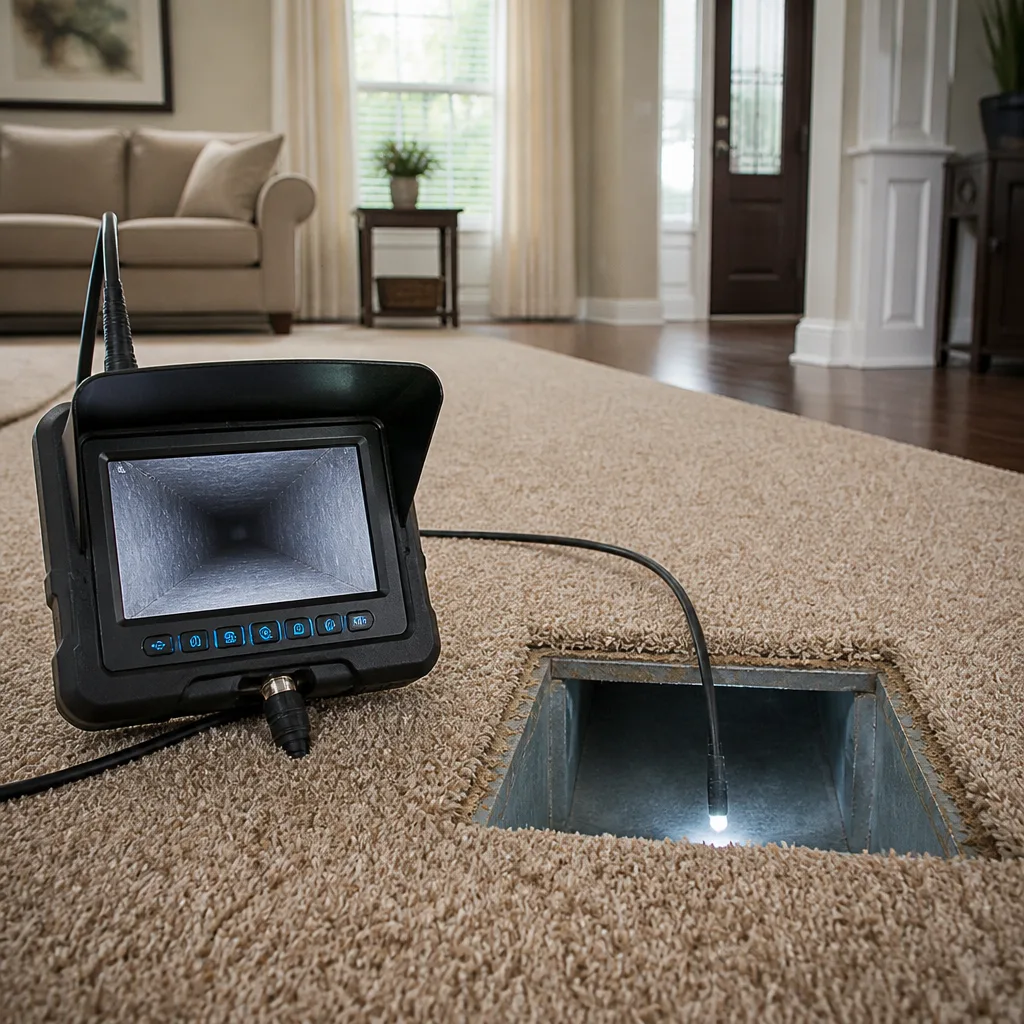 Camera inspection
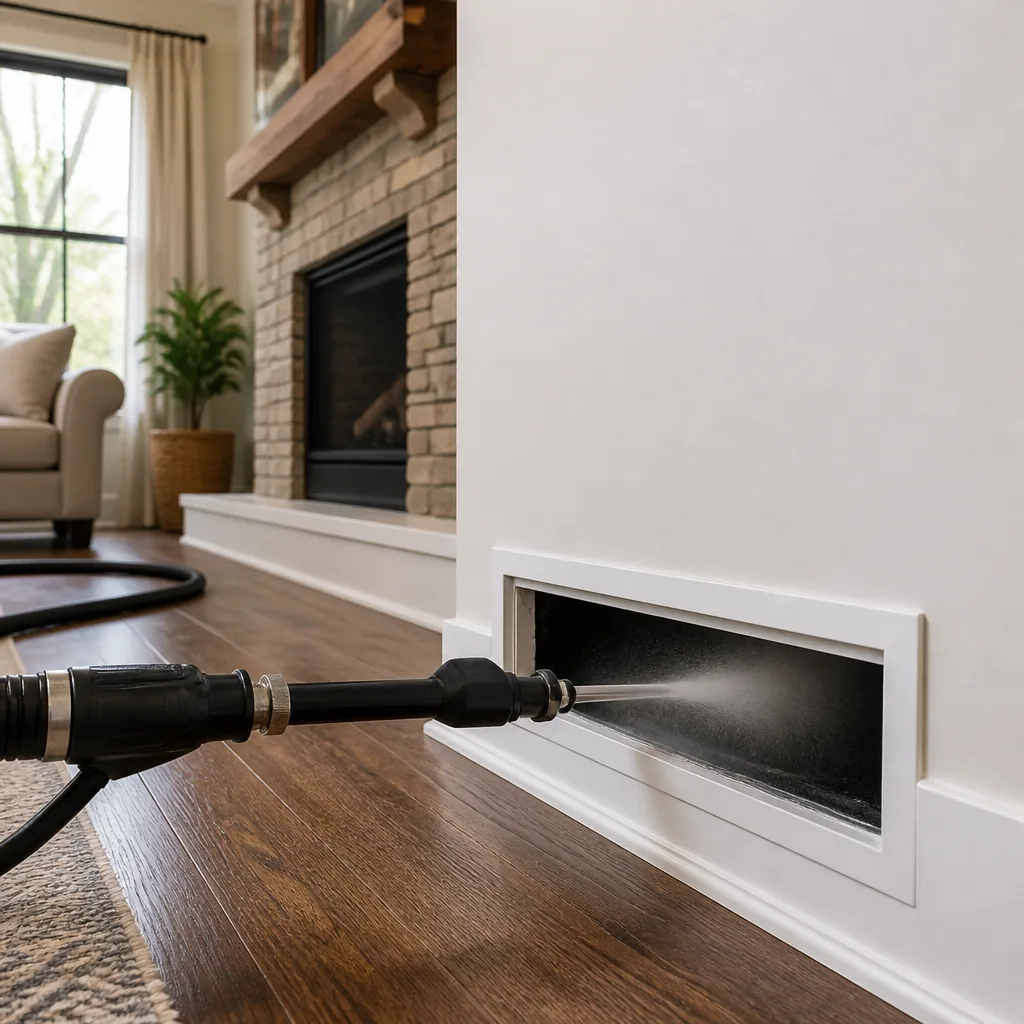 Sanitizing & deodorizing
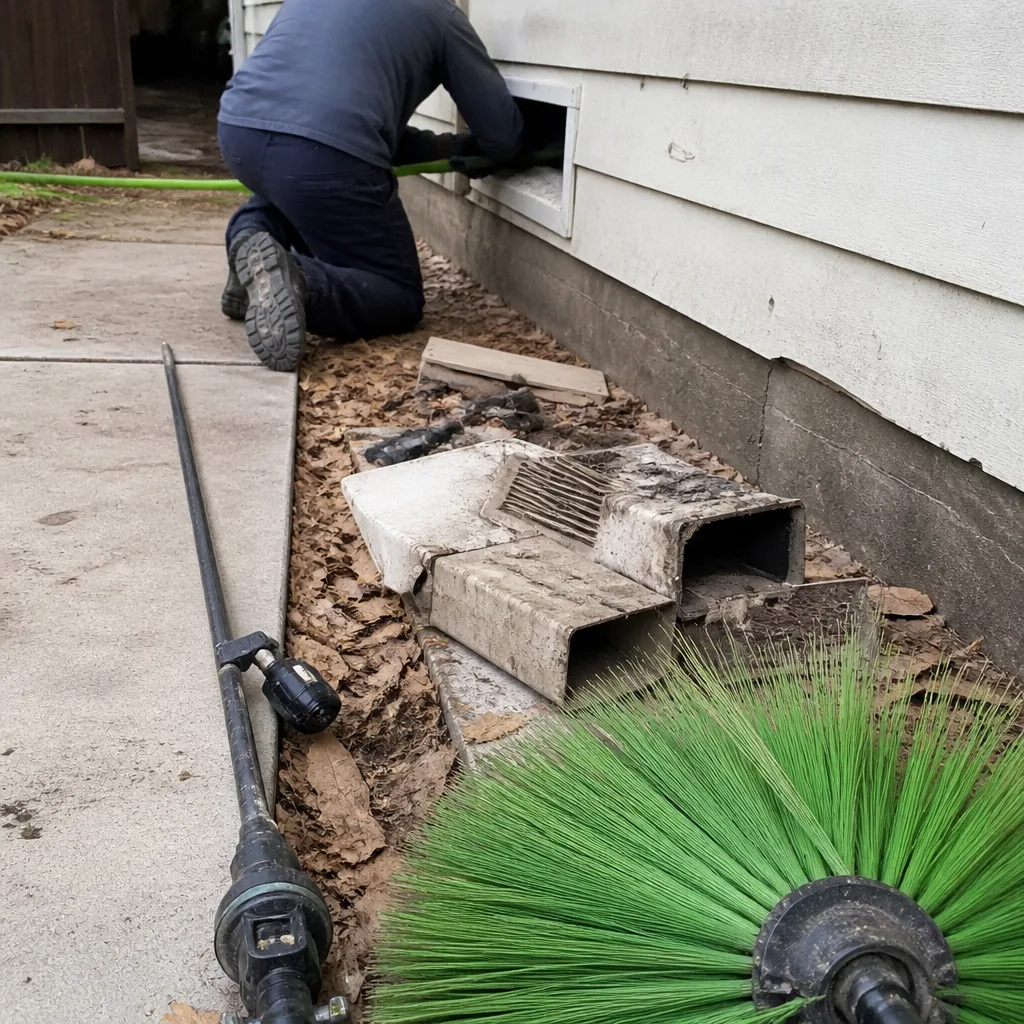
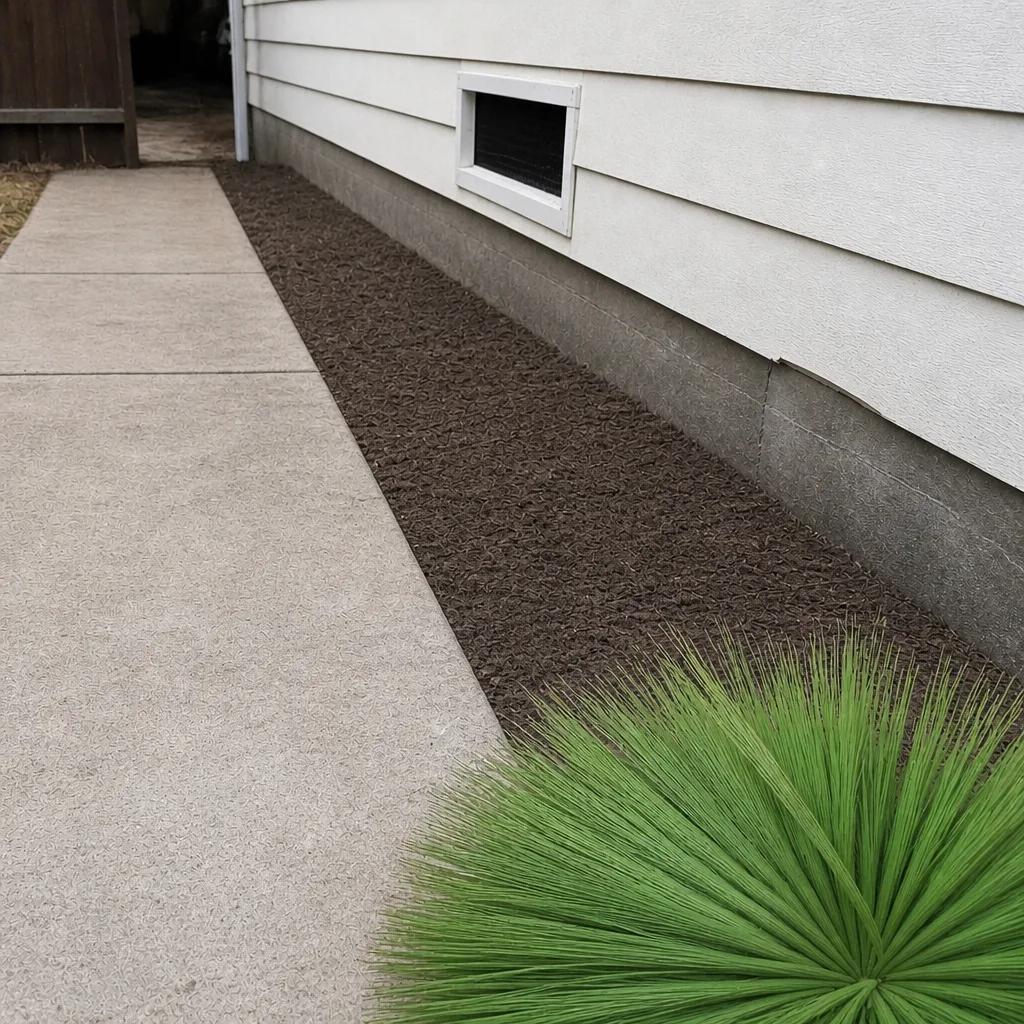
Whole-system duct and dryer vent check with before-and-after photos - you see exactly what came out of your vents
That "$99 whole-house special" is a bait ad - the real number appears once they are in your hallway, or the "clean" is a shop-vac at the register. We photograph the inside of your ducts before and after instead.
The Complete Guide to Air Duct Cleaning in Clearfield
Two trucks can pull into the same driveway, run a hose through the same register, and leave behind completely different results. One moves enough air to carry debris out of the system; the other stirs it around and calls it cleaning. The difference isn’t the price on the quote sheet or the logo on the door, it’s the physics inside the equipment. Most homeowners in Clearfield never get to see that difference, because nobody hands them a benchmark to check against. This guide does. You’ll learn what professional-grade airflow actually looks like, what a full-system clean covers from intake to outlet, how Clearfield’s high-desert conditions change accumulation rates, and how to inspect your own registers before and after any service so you can judge the work with your own eyes.
Quick Answer
Air duct cleaning in Clearfield means removing accumulated dust, debris, and biological material from every part of your HVAC system that air travels through: supply lines, return lines, the plenum, the air handler, and the registers. Done correctly with professional-grade agitation and negative-pressure equipment, it restores airflow and reduces what your family breathes. Done with consumer-level gear, it moves surface dust around and leaves the rest behind. The difference is measurable, and this guide shows you how to tell which one you’re paying for.
Styles & brands we work with
- Whole-home duct cleaning
- Dryer vent cleaning
- Camera inspection
- Sanitizing & deodorizing
Table of Contents
- Why Clearfield’s Climate Changes the Duct Cleaning Equation
- Equipment Benchmarks That Separate Real Cleaning From Cosmetic Cleaning
- What a Full-System Clean Actually Covers
- How to Inspect Your Own Registers Before and After Service
- New Construction Homes in Clearfield’s Expanding Developments
- How Often Does Your Ductwork Really Need Cleaning?
- Red Flags on a Duct Cleaning Quote
- Beyond Cleaning: Repair, Sealing, and Air Quality
Why Clearfield’s Climate Changes the Duct Cleaning Equation
Clearfield sits in the high desert along the Wasatch Front, and the conditions here treat ductwork differently than the national averages most cleaning companies build their recommendations around. Dust loads are higher. Temperature swings are wider. And the heating and cooling season runs harder than the same calendar months would in a temperate climate.
The dust itself is the first factor. High-desert soil is fine and alkaline, and wind events lift it into the air where it settles on every surface in a home, including the inside of return ducts. A family in Clearfield isn’t dealing with the same accumulation rate as a family in a humid, leafy climate, because there’s simply more particulate in the air to begin with. Filter changes that seem generous on a manufacturer’s schedule may not be frequent enough here during windy stretches.
The temperature swings matter just as much. Clearfield homes run heat through the same ducts for months, then switch to cooling, then back again. Each transition stirs settled debris loose. Wide swings between heating and cooling season also expand and contract duct seams, and those small gaps open pathways for dust to enter the system directly rather than through the filter.
What that means practically:
- Return ducts and filter grilles collect material faster than national averages suggest.
- Homes with pets or nearby construction see that accumulation accelerate further.
- Homes that switch between heat and AC frequently benefit from inspection more often than a once-a-decade schedule implies.
- Duct seams in older Clearfield homes are worth checking during any cleaning visit, because seasonal movement widens gaps over time.
If you’re already noticing dust settling faster than it used to, or your registers have visible buildup, that’s your system telling you the accumulation has crossed a threshold. A professional air duct cleaning visit is the right starting point, and it’s also the right time to ask about sealing any gaps the technician finds.
Equipment Benchmarks That Separate Real Cleaning From Cosmetic Cleaning
A shop vac and a truck-mounted negative-pressure unit can both be described as “professional” on a quote sheet. The difference isn’t marketing language, it’s airflow measured in cubic feet per minute, and the gap between the two is enormous.
Consumer-grade vacuums and shop vacs move in the range of roughly 150 CFM. That’s enough to pick up debris on the floor of a duct, but it’s nowhere near enough to hold the entire duct system under negative pressure while agitation knocks material loose. Truck-mounted duct cleaning units operate in a completely different range, often around 4,000 CFM. That number is what makes the whole process work: the vacuum holds the system under constant negative pressure so that when a brush or air whip disturbs debris, that debris leaves the system rather than settling into the next room.
Agitation is the other half of the equation. A vacuum alone won’t dislodge caked-on material from duct walls; something has to break it loose first. That’s where brush systems and air whips come in, and where the quality of the agitation tool matters as much as the vacuum behind it. Professional brush systems rotate at controlled speeds that scrub duct walls without damaging the liner or flex duct. We use Rotobrush systems for exactly this reason, and Nikro equipment for the broader HVAC cleaning side of the work. Both are the same class of equipment commercial contractors choose, and both are designed around the airflow-and-agitation principle rather than a single pass-and-go approach.
Here’s what to check when you’re evaluating a quote:
- Ask what the vacuum is rated for. A company that can’t tell you the airflow of its equipment is likely using consumer-grade gear or a light portable rig.
- Ask what agitation tool they use. Brush systems and air whips are the right answer. A hose with a wand and no agitation is not.
- Ask how the system is placed under negative pressure. The answer should describe sealing the system and connecting to the main trunk, not just dragging a hose through one register.
- Ask about containment. Professional indoor-air-quality work uses containment and air scrubbing to keep disturbed debris out of your living space. Without it, cleaning can make indoor air temporarily worse before it gets better.
- Ask what brands appear on the equipment. Rotobrush and Nikro are recognized benchmarks. You don’t need a specific brand name to get a good clean, but you do need equipment in that class.
These aren’t trick questions. A legitimate operator will answer them without hesitation, because the equipment is the whole argument.
What a Full-System Clean Actually Covers
Budget duct cleaning often means one thing: a hose ran through some supply registers, maybe a pass over the return, and an invoice. A full-system clean covers every part of the system air touches, from the point it enters to the point it leaves. The registers are the most visible part and the least important part of the job.
Here’s what a complete clean includes:
- Supply lines. Every branch duct running from the main trunk to each register. These are the ducts that deliver conditioned air, and they’re the ones most likely to be skipped when a job is priced per vent.
- Return lines. The larger ducts that pull air back to the air handler. Returns collect more debris than supplies because they’re pulling unfiltered room air, and they’re routinely ignored by low-cost jobs.
- Main trunk lines. The large ducts that distribute air through the home. Debris settles here first and builds up over time.
- The plenum. The connection between the air handler and the trunk system. It’s a small space with a high debris load.
- The air handler. The cabinet containing the blower and the evaporator coil. Dust on the blower wheel cuts airflow; dust on the coil insulates it and reduces efficiency. This is HVAC cleaning, and it belongs in any full-system job.
- Registers and grilles. The visible diffusers get removed, cleaned, and reinstalled. Liftoff grilles and return grilles are the entry points you’ll use to check the results yourself.
If a quote only mentions “per vent” cleaning, ask what happens to the returns, the plenum, and the air handler. If the answer is vague, the job is partial. We treat the whole system as one connected piece of equipment, because that’s what it is. Clean ducts are only the beginning; the system works as a unit, and it should be cleaned as one.
How to Inspect Your Own Registers Before and After Service
You don’t need special tools or training to see whether duct cleaning worked. You need a flashlight, a phone for photos, and a willingness to look inside a couple of registers before anyone touches them.
Before the service:
- Pick two supply registers and one return grille, ideally in different rooms.
- Remove the grille (most are held by two screws or two spring clips; note how it goes back on).
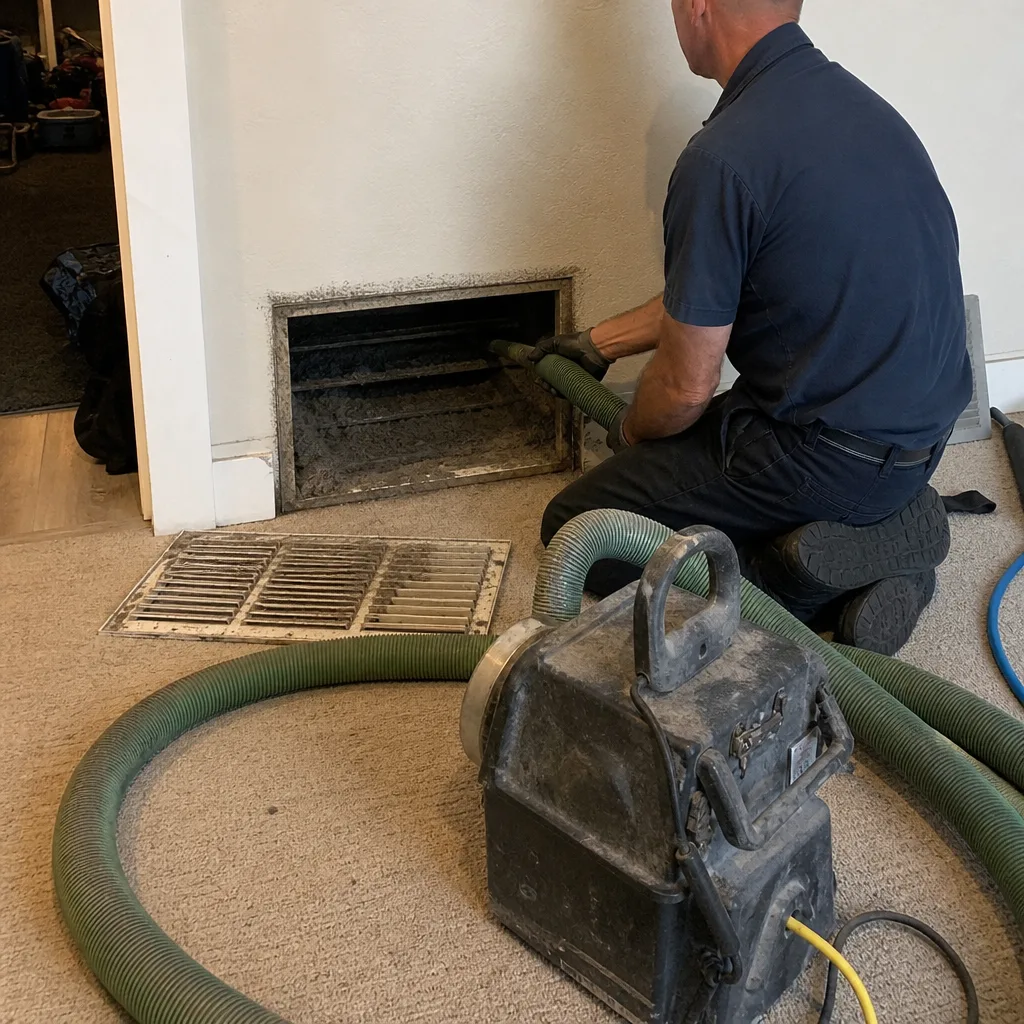
- Shine a flashlight into the duct and photograph what you see. Look for a visible layer of dust, debris clinging to the duct walls, pet hair, or a general gray film coating the liner.
- Wipe a finger along the inside of the duct wall and check the cloth. A clean wall leaves a light haze; a dirty one leaves a visible gray or black mark.
- Repeat at each location and keep the photos. This is your baseline.
After the service:
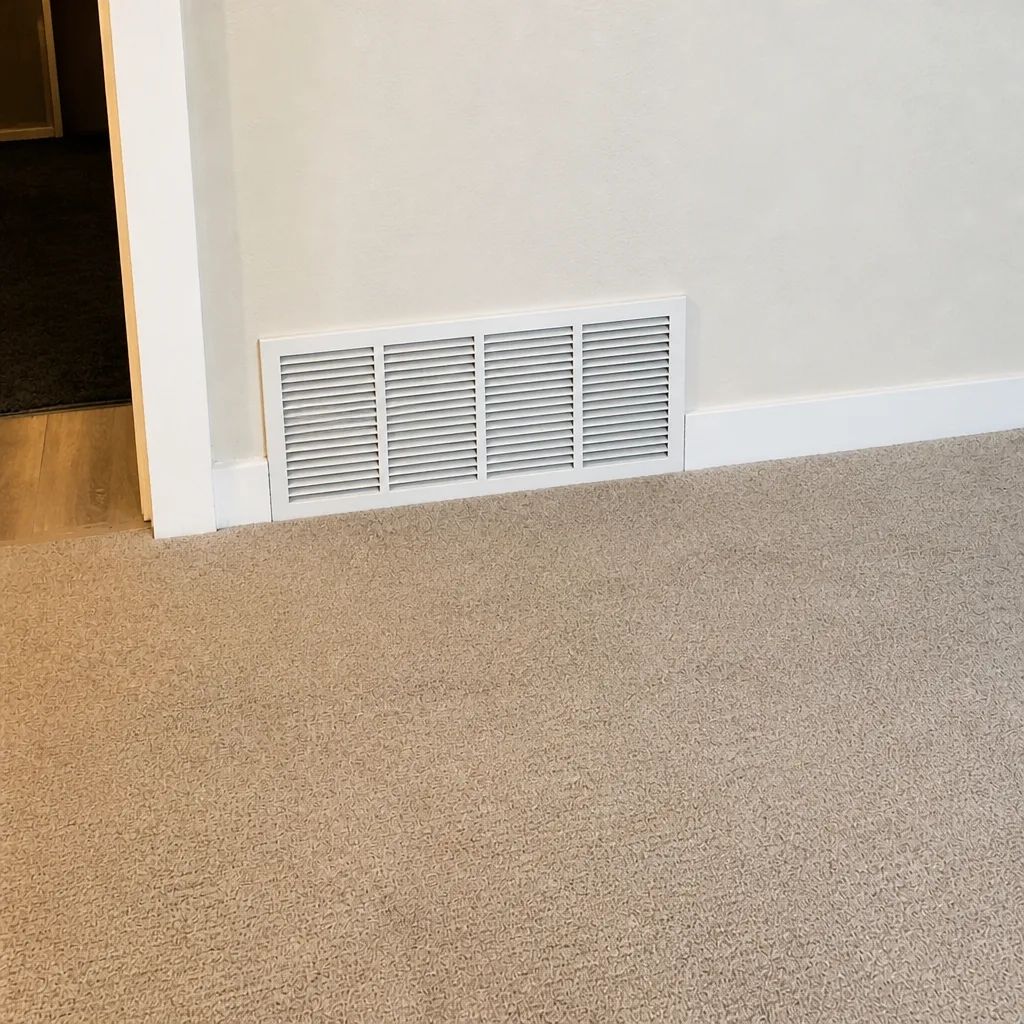
- Repeat the same three locations, same photo angles, same flashlight position.
- Wipe the duct wall again with a clean white cloth.
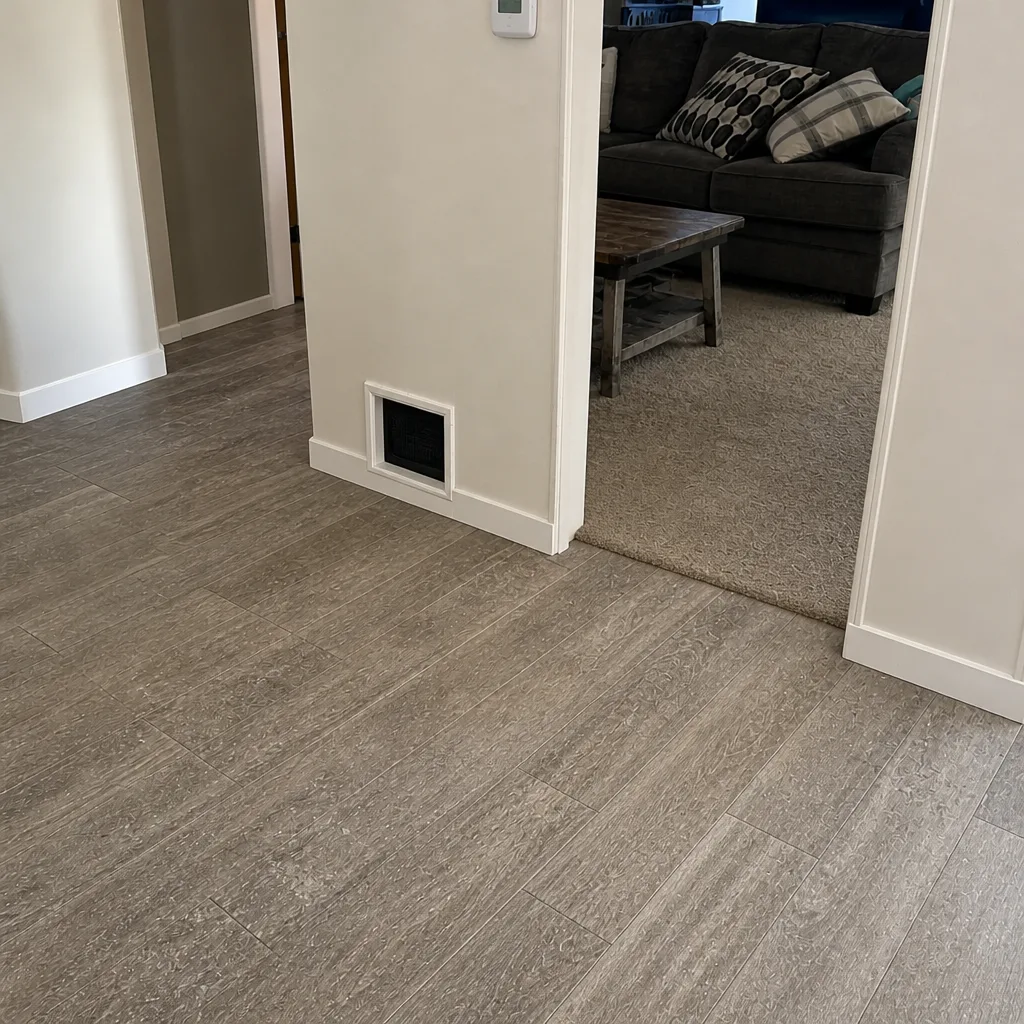
- Compare the photos side by side.
- Check for loosened debris, dust trails near grilles, or visible residue settled in the bottom of the duct run.
What you’re looking for is a real, visible difference between the before and after. If the duct walls are clean and the photos show it, the work happened. If the duct still shows a dust layer in the same spots, the cleaning was cosmetic.
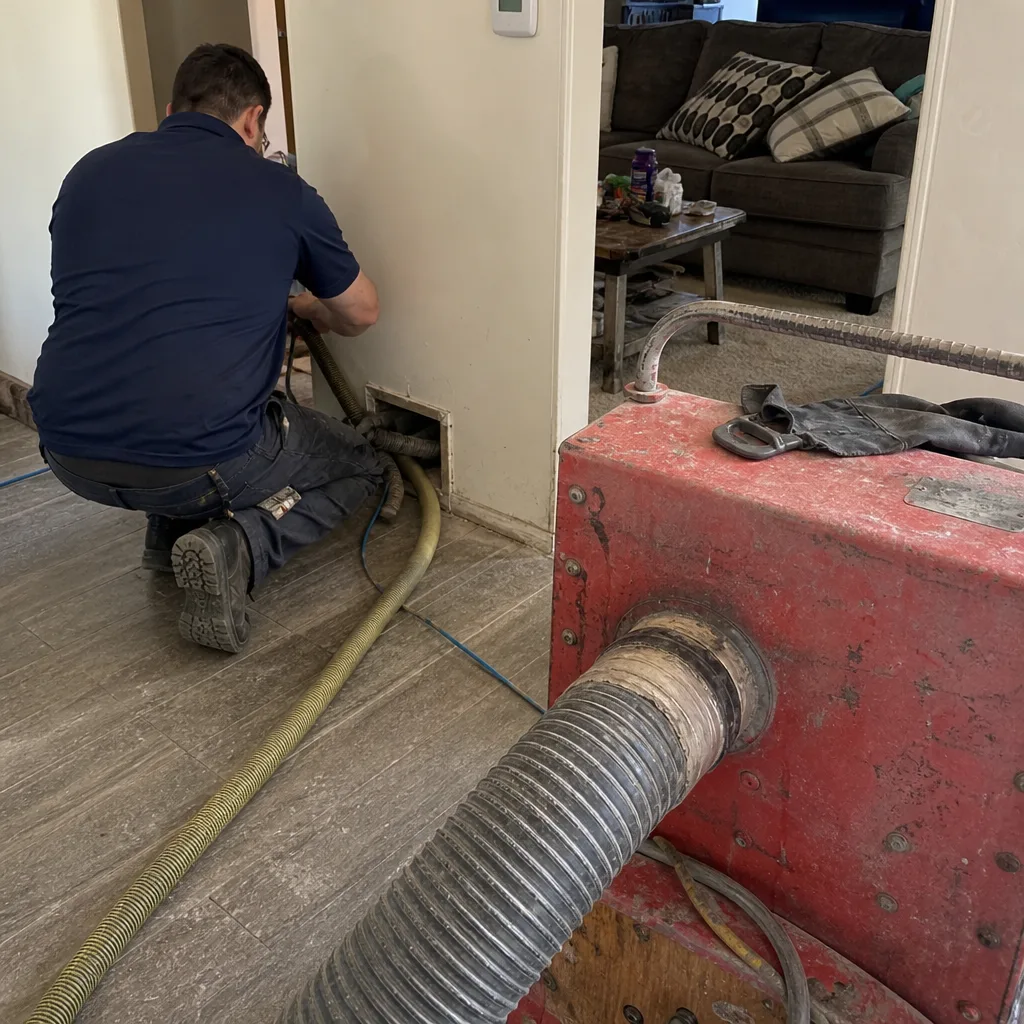
One more check: ask for before-and-after photos of your own system, taken by the technician. A company that’s actually cleaning your ducts will have no trouble producing them. If the only documentation is a generic brochure photo, that’s worth noting.
New Construction Homes in Clearfield’s Expanding Developments
New construction and clean ducts are not the same thing. This is one of the most common assumptions we run into across Clearfield’s newer developments, and it’s understandable: a brand-new home feels like a clean slate. The realities of construction say otherwise.
Construction debris is the first issue. Drywall dust, sawdust, insulation fibers, and sheetrock mud particles settle into ductwork during the build. Some of it falls into open duct ends before registers are installed. Some gets pulled in once the HVAC system is tested and run. That material is in the system before the first family moves in, and it will circulate through the home for years if it’s not removed.
Construction air handling is the second issue. Contractors run the HVAC system during finishes and cleanup, which pulls fine particulate into return veins that filter changes won’t dislodge. A standard furnace filter is designed to catch airborne dust once, not to clean the interior of a duct system that’s already received a load of building material.
The third issue is what our high-desert climate adds. New homes in Clearfield are surrounded by disturbed soil during the build, and fine desert dust settles into everything before landscaping and paving are complete. That dust is the same alkaline material that finds its way into established Clearfield homes; a new property just gets a stronger initial dose.
If you’ve recently closed on a new build, a full-system clean before first occupancy is worth the conversation. It also gives you a chance to check the duct sealing, because construction-year ductwork often has gaps at joints and boots that a professional inspection will catch.
How Often Does Your Ductwork Really Need Cleaning?
There’s no universal schedule that fits every home, and any company that quotes you a fixed interval without seeing your system is guessing. What we can give you is a set of conditions that indicate the system is due, based on how air actually moves through ductwork in Clearfield.
Get an inspection if any of these apply:
- Visible dust or debris inside registers or return grilles.
- Dust settling on furniture faster than it used to, even with regular cleaning.
- Family members with allergies or respiratory sensitivities who notice symptoms indoors.
- You’ve recently completed a renovation, remodel, or new construction.
- You’ve moved into a home where the previous occupants had pets, or you have pets yourself.
- You’ve noticed a musty or dusty smell when the system first kicks on.
- The HVAC system has been running with a torn or missing filter at any point.
- It’s been several years since any full-system clean has been done and you don’t know the history.
For most established Clearfield homes, an inspection every few years is a reasonable pace, and a full clean when the inspection shows genuine accumulation. That’s a genuine judgment call that depends on filter habits, pets, household size, and the dust conditions around the home. What matters is that the decision is based on what’s actually inside the ducts, not on a coupon that showed up in the mail.
Red Flags on a Duct Cleaning Quote
Most of the trouble in this industry comes from bids that were designed to be upgraded later. The pattern is the same: a low teaser price gets you to say yes, and by the time the technician is on site, you’re being told the price you agreed to covers only part of what needs doing. Here’s how to spot that pattern before you book.
- A per-vent price instead of a whole-system price. Per-vent pricing incentivizes the company to do the minimum and leave the big work for the upsell. Ask for a flat price for the whole system.
- “Additional fees will apply.” If the quote can’t tell you what’s included and what isn’t, the price isn’t real.
- Consumer-grade equipment described as professional. Ask about airflow ratings and agitation tools before you book.
- Pressure to book during the call. Legitimate companies will happily give you a written estimate and let you think it over.
- No written estimate. One flat price per system, agreed before work starts, in writing. That’s the standard we hold to.
- No mention of the air handler or plenum. If those aren’t in the scope, the price is for a partial job.
- No before-and-after documentation of your system. You should be able to see your own ducts before and after. Ask for the photos.
Bring out the flashlight and inspect your own registers, then compare what you find to what the quote promises. You don’t need expertise to judge that difference. You just need the photos.
Beyond Cleaning: Repair, Sealing, and Air Quality
Cleaning is a point-in-time event. The ducts themselves are a working part of your home, and the parts of the system that determine long-term indoor air quality are the ones that don’t get restored by a cleaning pass alone.
Repair and sealing. Duct seams and joint connections develop gaps over the years, especially in homes where the system has gone through many heating and cooling cycles. Those gaps leak conditioned air into wall cavities and crawl spaces, and they pull unfiltered dust in through the same openings. Sealing them is a fundamental part of making the ducts work as a system, and we do that work as part of our service rather than handing the job off. We repair what we find, right then.
Filtration and air quality improvements. Higher-efficiency filtration systems and whole-home air-quality products, including Honeywell and Aprilaire equipment, address the air moving through the system long after the cleaning truck leaves. If the goal is genuinely cleaner air inside the home, cleaning and filtration should be planned together.
Sanitizing and containment. The finishing step in a full clean typically involves containment and air scrubbing to protect the living space, plus a sanitizing product designed for the duct interior. Guardsman-brand products are commonly used in the finishing step. Abatement Technologies equipment is the standard for containment and air scrubbing in genuine indoor-air-quality work.
Dryer vent cleaning. Ductwork isn’t the only place dust and lint accumulate in a home system. The clothes dryer vents lint through a duct of its own, and lint buildup in that run is one of the most overlooked household fire risks. Dryer vent cleaning is part of the standard service mix for that reason.
Air quality inside a home works as a system, and it changes over time. Cleaning is the reset button. The rest of the work is what keeps it that way.
Common Mistakes to Avoid
- Judging a company by the coupon price. The lowest quote in the mailbox is almost always a partial job with a path to an upsell. Judge the quote by the equipment and the scope, not the initial number.
- Assuming new construction means clean ducts. Clearfield’s newer developments get construction debris and disturbed desert dust into the ductwork before the first move-in. A pre-occupancy clean is worth budgeting for.
- Skipping the return lines and air handler. Supply lines get all the attention because they’re visible. Returns and the air handler collect more debris and are where budget jobs cut corners.
- Not documenting before and after. Take your own photos of the duct walls through the registers before and after service. If the difference isn’t visible, the work didn’t happen.
- Not asking about airflow and agitation. A truck-mounted vacuum without agitation tools just stirs the debris. Ask about the equipment class before you book, and expect a real answer.
- Putting off duct sealing. Leaky ducts in a Clearfield home pull unfiltered dust into the system every time the heater runs. If a technician finds gaps during a clean, sealing them is part of the fix, not a separate future project.
- Going years between filter changes during windy stretches. High-desert dust events strain filters fast. A filter that looks fine in a temperate climate may be overdue in Clearfield.
See the difference
 Before
 After
 Before
 After
 Before
 After
When to Call a Professional
Some situations call for a professional rather than a homeowner’s inspection. If you can see a visible dust layer inside your registers, if there’s a musty smell when the system first starts, if anyone in the home has respiratory sensitivities that seem worse indoors, or if you’ve recently finished a remodel or moved into a new build, call. Registers that look clean but produce dust settling faster than usual are also a reason to call, since the accumulation is likely inside the duct runs rather than at the visible outlet. And if a technician discovers duct seams that have separated or a boot that’s pulling away from the floor, that’s duct repair work, not a cleaning problem, and it’s better addressed now than after a season of leakage. Clearfield Air Duct Cleaning offers free estimates in Clearfield. Call (833) 468-5771 to schedule an inspection and get a flat price for the whole system.
Frequently Asked Questions
Pricing for a full-system clean depends on the size of the home, the number of duct runs, whether the air handler and plenum are included, and whether repair or sealing is needed. We give a flat price per system based on a written estimate, not a per-vent price, so the number you agree to is the number you pay. A written quote is free and requires no commitment. Call (833) 468-5771 for an exact estimate.
Cheap quotes are almost always partial jobs: a hose run through a few supply registers with no return cleaning, no plenum, no air handler, and consumer-grade equipment that lacks the airflow to move debris out of the system. The low number on the quote sheet is the start of the process, not the finish. If the price seems far below the others you’ve received, ask what the scope actually includes. Call (833) 468-5771 to talk through what a full-system quote covers.
You can verify the work yourself with a flashlight. Take photos of the duct walls through two supply registers and one return grille before the service, and repeat the same photos afterward. A real clean leaves visibly cleaner duct walls and no settled debris in the duct runs. Ask for before-and-after photos of your own system as part of the job, and compare what you see. Call (833) 468-5771 to book a clean you can verify.
Most Clearfield homes benefit from an inspection every few years, with a full clean when the inspection shows genuine accumulation. Clearfield’s high-desert dust load and wide seasonal temperature swings push accumulation faster than the national averages you’ll find in most online guides, and homes with pets or recent construction tend to need service more often. There’s no universal schedule. Call (833) 468-5771 for a free estimate and an honest inspection of what’s inside your system.
Yes, often. New construction ducts collect drywall dust, sawdust, insulation fibers, and disturbed soil during the build, and some of that material settles in the ductwork before the system is ever run for occupancy. A pre-occupancy clean is a reasonable step in Clearfield’s newer developments, and it’s a good time to check duct sealing at the joints. Call (833) 468-5771 to schedule a new-construction duct inspection.
The difference is airflow. A shop vac moves somewhere around 150 CFM, while a truck-mounted duct cleaning unit can move closer to 4,000 CFM. That gap is what makes a real clean possible: high airflow holds the duct system under negative pressure while agitation knocks debris loose, so the debris leaves the system instead of settling elsewhere in the house. Without that airflow, the cleaning is cosmetic. Call (833) 468-5771 to see what we run on a Clearfield job.
The Bottom Line
Duct cleaning is one of the few home services where you can verify the result yourself with a flashlight and a couple of photos, and that’s the single most useful tool in this whole guide. Ask about the equipment class, ask what the scope includes, ask for before-and-after photos of your own ducts, and check your own registers. If a company can answer all four without hesitation, you’re on solid ground. If the quote was per-vent and the scope skipped the returns and air handler, you know what kind of job you’re looking at. Clearfield’s high-desert dust and temperature swings mean your system works hard all year. Our technicians have up to 8 years of experience, and we use professional-grade equipment from Rotobrush and Nikro, with Abatement Technologies containment for genuine indoor-air-quality control. One flat price per system, agreed in writing before work starts, and a free written estimate so you can review it on your own time.
Whether you’re in Clearfield’s newer developments, an established neighborhood, or managing a rental property, the team at Clearfield Air Duct Cleaning offers free estimates and books straight from the call. Call (833) 468-5771. We answer 24/7. Fast dispatch from 7am to 7pm, Sunday through Friday.
Written by the team at Clearfield Air Duct Cleaning.